
Building a Behaviour Support Practice in Public | PBS Practice Notes #01
A behaviour support practitioner for children and young people on why she's building her practice in public: the method, the tools, the privacy line and what v0.1 means.
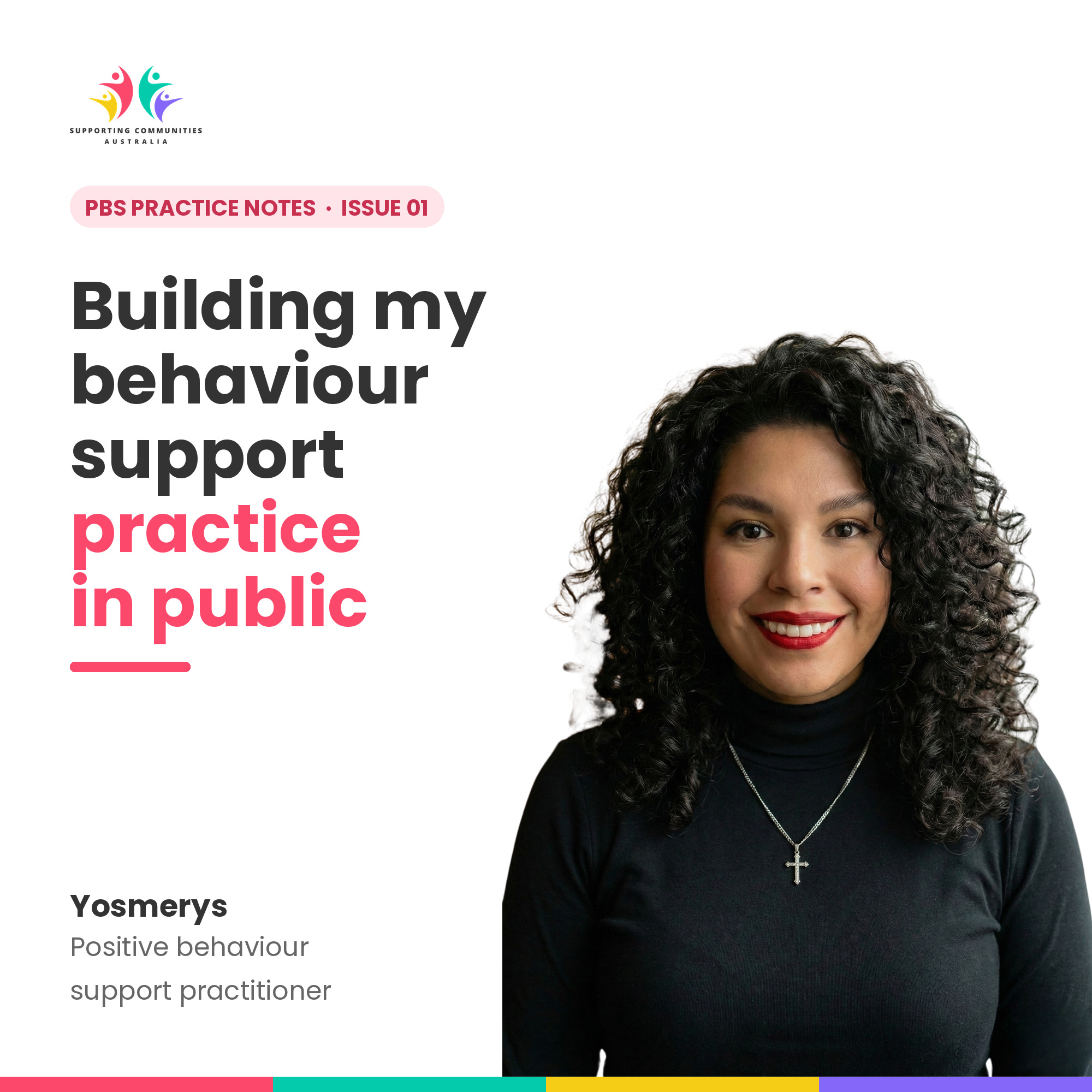
Most behaviour support work happens where nobody sees it. In a kitchen at seven at night. In a school office after a hard morning. In the notes you write in the car when the visit’s over.
I want to show some of that work. Not the people. The work.
So this is the first issue of PBS Practice Notes. Every second week I’ll write about one part of how I practise positive behaviour support with children and young people: how I think about it, the standards I work to, the tools I’m building and what I’m learning. Some of it will be finished. A lot of it won’t be.
Why I’m building my practice in public
I’ve spent about eight years on the frontline, across disability, youth and out-of-home care. I’ve been the support worker handed a plan I couldn’t follow on a bad shift. I’ve watched good strategies fade because nobody showed the team how to use them. I’ve read plans that described a young person in words they’d never recognise as themselves.
Now I’m on the other side of the page. I deliver positive behaviour support as a practitioner, currently under a registered provider, and I’m working toward registering my own practice in 2027. That gives me a short window to build the practice on purpose. To decide what it stands for before habits decide for me.
Doing that in public is part of the discipline. If I write down how I work, I have to be able to explain it. If I explain it, people can question it. That’s good for the practice, and it’s good for the families who’ll one day be deciding whether I’m the right fit.
What “v0.1” means for a behaviour support approach
You’ll see me use v0.1 a lot. It’s borrowed from software. It means the first version that works well enough to test, but not well enough to call finished.
The approach I’m developing is v0.1. For now I’m calling it “the young person as author”. The idea is that children and young people can have a real hand in making their own support materials, through drawing, characters and story, while the adults around them still get a proper plan they can use. Some of the tools it draws on have good evidence behind them. Some are newer and less tested. Some of it is a stance more than a science. It hasn’t been tested in practice yet. I’ll say that every time I write about it, and I’ll be clear about which part is which.
I’d rather show you v0.1 and tell you what I’m watching than hand you something polished that hides the guesswork.
What I’ll share: method, tools and standards
How I approach an assessment, and what I’m looking for when I try to understand why something keeps happening. Why I want health ruled in or out before I build a behavioural explanation. How I try to make a plan something a parent can actually run at seven at night, not something that sits in a folder.
The tools. I’m building a small set of systems so my hours go into understanding patterns, not chasing paperwork. A page that tracks what’s due on each case. A one-minute log families can fill in on their phones. A way of turning that log into charts I can read in minutes. They’re not products. They’re the scaffolding that lets me spend time on the thinking.
The standards. What the NDIS Quality and Safeguards Commission expects from behaviour support, and what that looks like in a lounge room rather than on paper.
And the learning: the training I’m doing, what I change, and what doesn’t work.
What I won’t share, and why privacy comes first
Anyone I support. Ever.
The children and young people I work with, and their families, said yes to behaviour support. They didn’t say yes to being content. When someone depends on you for a service, asking them isn’t a fair question. So you won’t read about a real person, family, school, suburb or week here. When I need an example, it’ll be a composite drawn from years of work, and it’ll be labelled as one.
Down the track, some of the fictional stories young people and I make together might be shared. Only a specific piece, only when the young person and their family have said yes to that piece, and never their original drawings.
If you think you recognise someone in these notes, you don’t.
How I’ll know if something is working
Whenever I try something, I’m going to ask the same questions. Does it make the plan easier for the adults to run? Does the young person choose it? Does the data move?
If the answer is no, I’ll change it, and I’ll tell you what I changed. That part matters to me. A practice that only shows its wins isn’t really showing you how it thinks.
Who PBS Practice Notes is for
If you’re a parent wondering what behaviour support actually involves, I hope this makes it less of a mystery. If you’re a support coordinator or work in a school, this is how I work, written plainly, so you can decide whether it fits the young people you support. If you’re a practitioner, take what’s useful and tell me where you’d do it differently. I’d genuinely like to know.
Next issue: what positive behaviour support actually means in Australia, and what it doesn’t.
Questions
Will you write about the young people you support? No. Examples are composites from years of frontline work, labelled every time.
What is PBS Practice Notes? A fortnightly series on how I practise positive behaviour support with children and young people: method, tools, standards and learning.
If you’d like these notes every fortnight, join the list below. If you’d like to talk about support for a young person, get in touch.
Behaviour that needs specialist eyes?
15-minute call, no commitment. If we're not the right fit, we'll point you to someone who is.